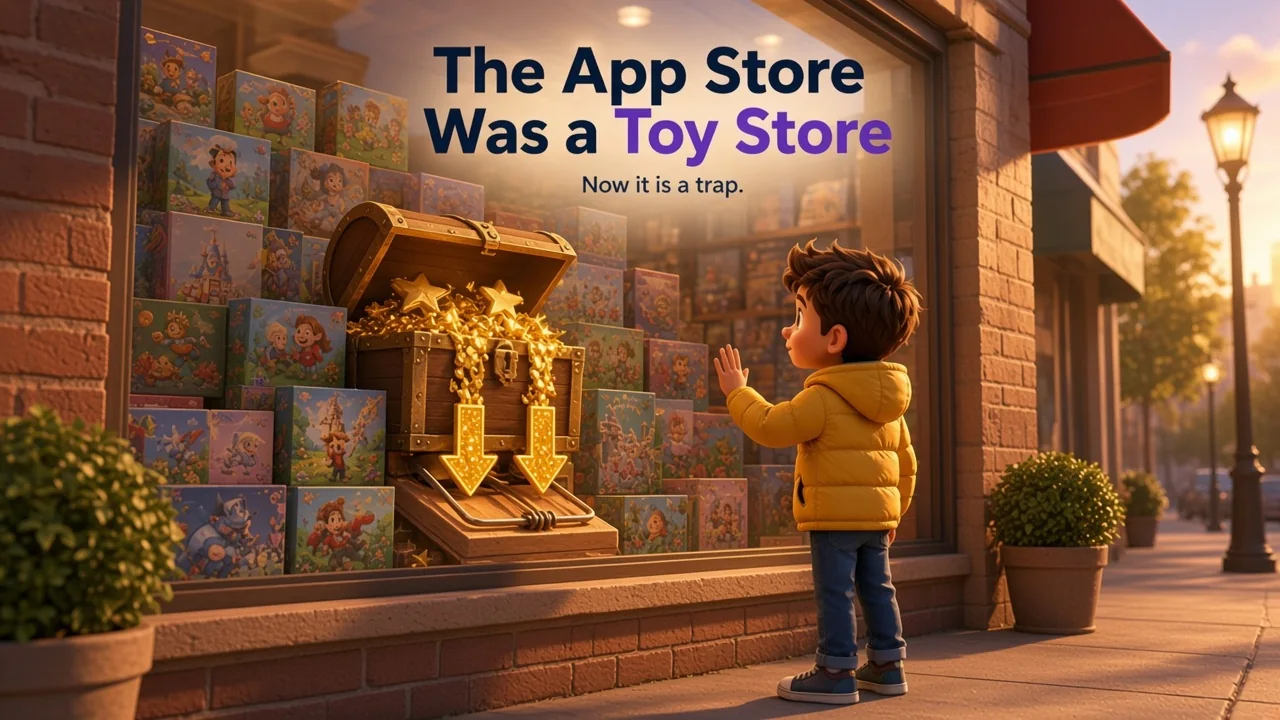
Remember when the App Store felt curated? Early iOS under Steve Jobs sold a simple idea: good apps, vetted, in one place. For parents it was almost calming. You could let a kid browse without feeling like you’d dropped them in a flea market run by casino designers.
That version of the store is dead.
The kids’ games section now runs on bait. Loud promises. Bright thumbnails. And a whole lot of apps that make money by disappointing children after the install.
You’ve seen this ad
Maybe not this exact one. But this genre.
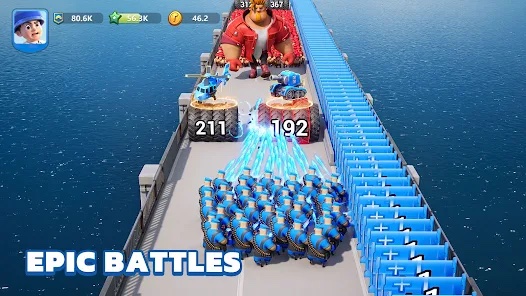
A blue army running through multiplier gates toward some giant boss, stamped “EPIC BATTLES.” Your kid watches for ten seconds and their brain goes: I want that.
They download it.
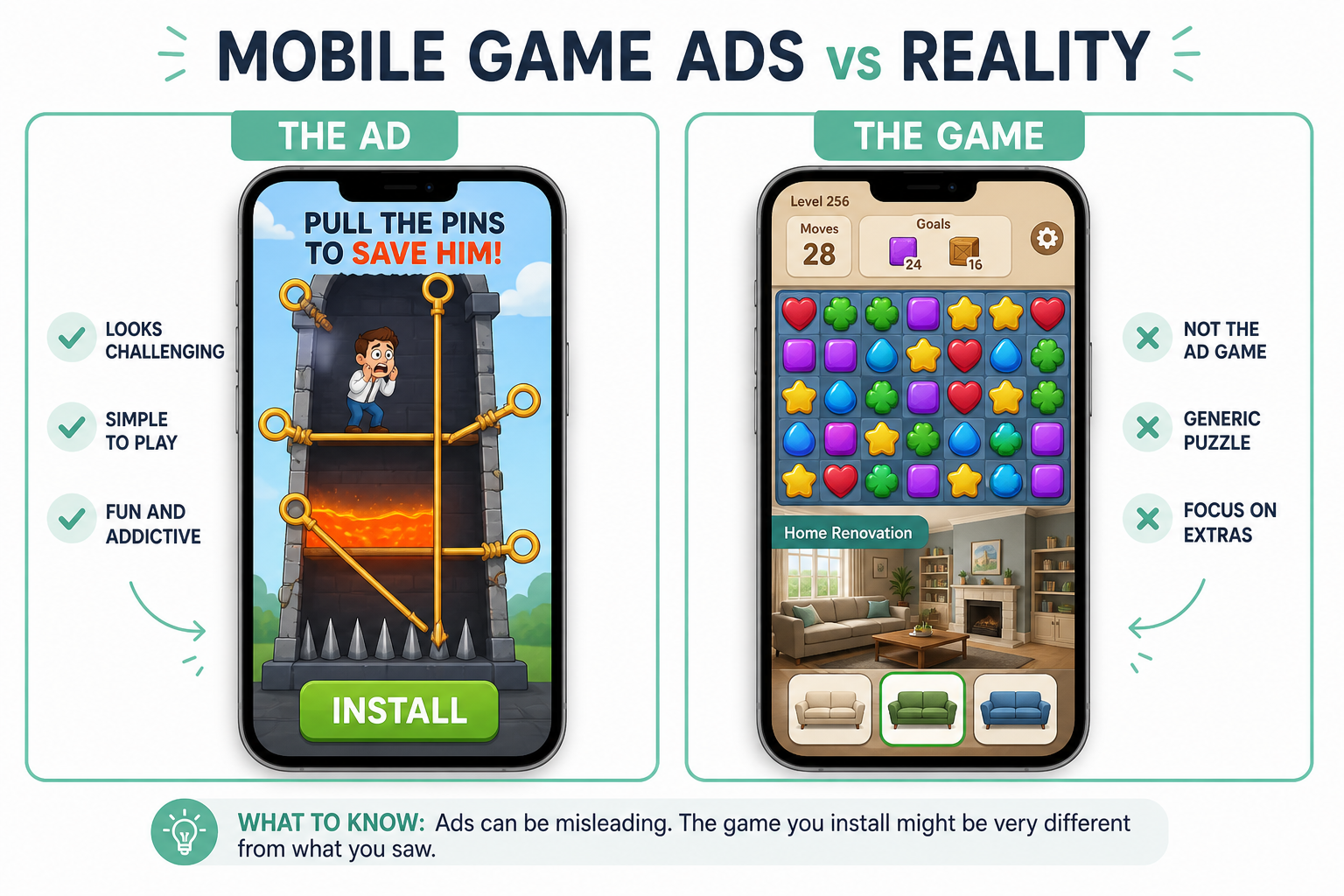
What they get is frequently a different product entirely. A base builder. A match-3 grind. A thin shell around ads and coin shops. Sometimes the ad gameplay never shows up. Sometimes it’s buried so deep that most players never find it. Either way, the download was sold with a movie trailer for a film that isn’t playing.
Homescapes and Gardenscapes made this industrial. For years their ads showed pin-pulling puzzles and crisis scenarios while the real games were mostly match-3 renovation loops. In 2020 the UK’s Advertising Standards Authority banned some of those ads as misleading. The tiny disclaimer (“not all images represent actual gameplay”) didn’t get them off the hook.
The rest of the industry watched and copied the playbook. If a fake mechanic converts installs, someone will run it.
Fake stars make the trap look safe
The store page finishes the job.
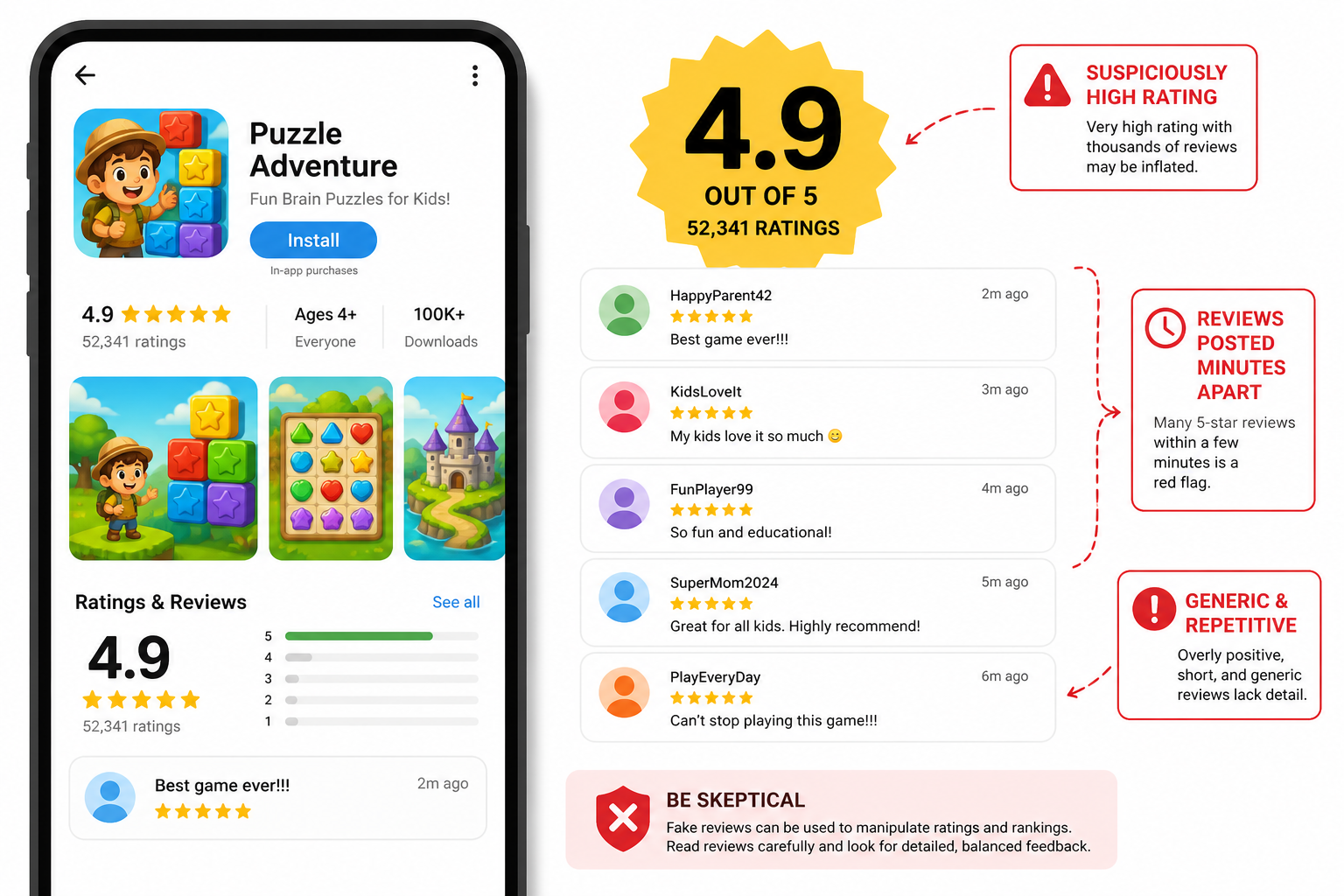
4.9 stars. Thousands of reviews. “Amazing!!!” “My kids love it.” Written like they came from the same afternoon and the same intern. Kids don’t fact-check that. They see a big number next to a cartoon icon and assume adults already approved it.
Ratings were supposed to surface quality. In too many kids’ categories they mostly prove someone optimized for looking trustworthy.
After the download, the real product shows up
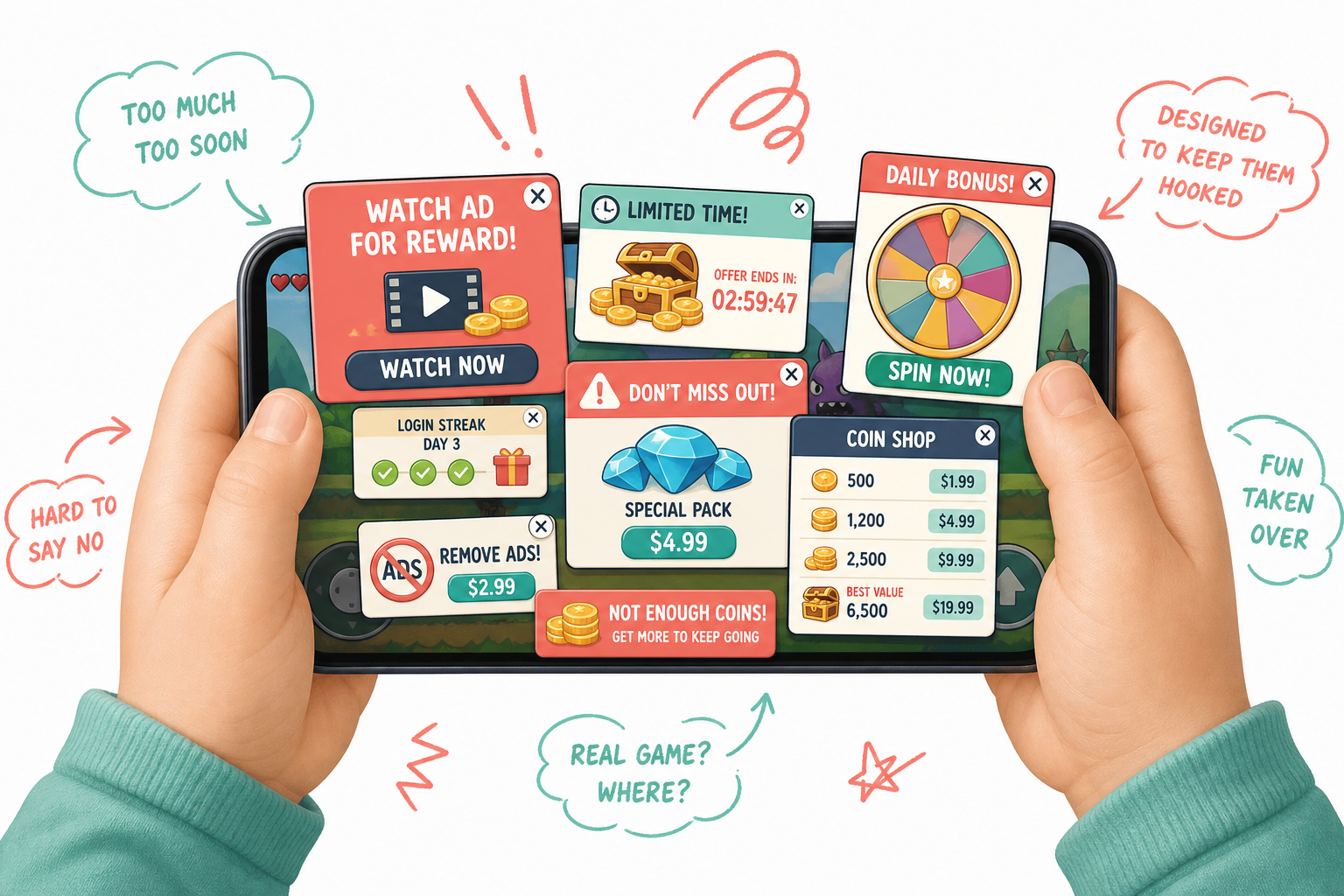
Then the phone fills with junk.
Pop-ups. “Watch an ad for coins.” Timers that punish patience. Offers designed to make waiting feel stupid. And yes, ads that have no business showing up after a child tapped a cartoon icon.
Not every free game is garbage. Plenty of indie apps are honest. But the incentive structure drifted. Curation got softer. User acquisition got nastier. Kids got put in the middle.
What I say when my son gets burned
My son has fallen for these ads more than once. He gets excited, downloads the game, and then realizes it isn’t what he was promised.
I used to delete the app and leave it there. That didn’t teach him much except that adults fill the store with junk.
These days I try a different approach:
Build the game from the ad. The one you actually wanted.
It changed how he reacts. Instead of just feeling ripped off, he treats the ad like a prompt. Someone showed him an idea. Now he can make a version that’s actually playable.
That’s a big part of why Makerplay exists.
Make the game. Skip the trap.
Apple and Google can still clean up the stores if they want to. Better review enforcement. Real consequences for bait-and-switch ads. Less tolerance for review spam.
While they drag their feet, I’m not raising my kid as a permanent customer of that system.
On Makerplay he can describe the game he wished he’d gotten, build it with a coach, play the real thing, and share it with family. No ads. No stranger chat. No coin-shop slot machine pretending to be childhood.
When a fake ad disappoints him now, we don’t just shrug. We open Makerplay and make the honest version.
For a place to begin together, try our creative screen time activity: change one rule, play the result, and let your child decide what comes next.
If your kid has a favorite fake-ad betrayal (or rebuilt one out of spite), email me. I read those.